
Exchange booth, bank or ATM
Each option solves a different problem. Compare the amount you will actually receive after every fee and conversion, not just the largest number on a sign.
CASH
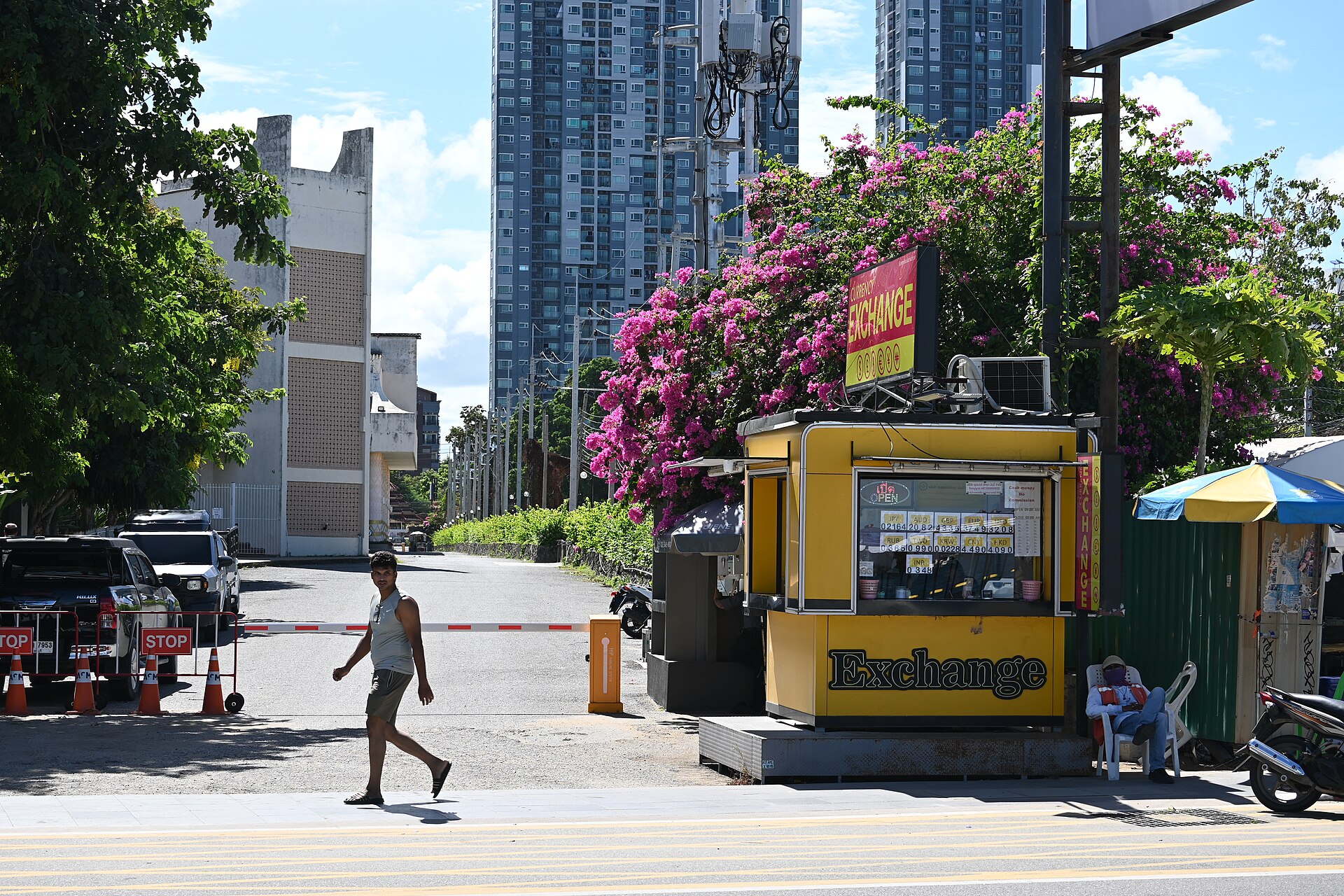
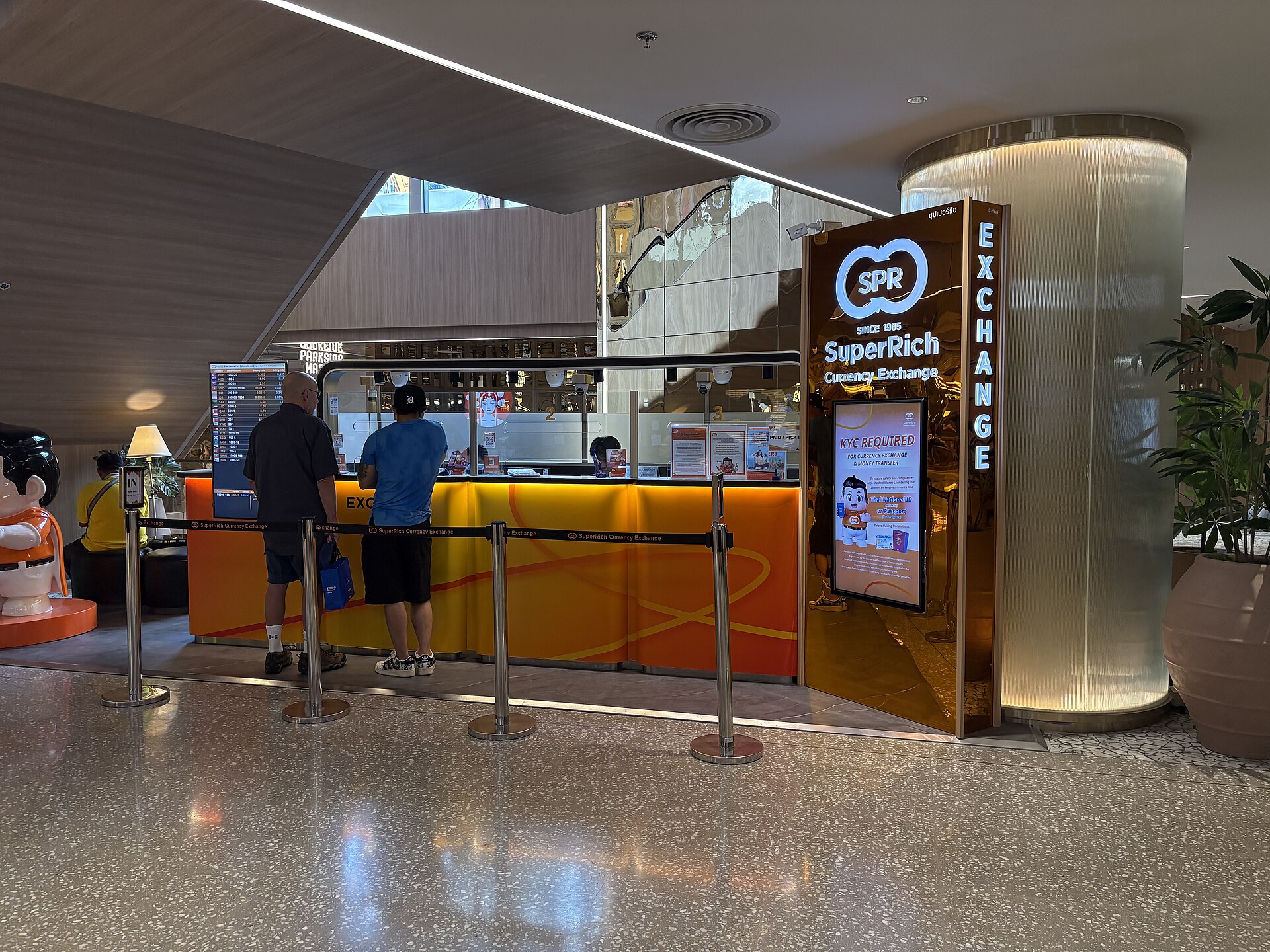
Licensed exchange booth
Usually the clearest choice when you have foreign banknotes and need baht. Show the notes first and ask exactly how many baht you will receive.
- Best for
- Everyday cash amounts and comparing several nearby providers.
- Check before you proceed
- A valid licence, the rate for your currency and note denomination, note condition, passport requirements and a receipt.
FORMAL TRANSACTION
Bank branch
Useful when you need formal documentation, staff guidance or a transaction linked to an account. It may take longer, and accepted currencies vary by branch.
- Best for
- Transactions that need a bank record or onward credit to an account.
- Check before you proceed
- Foreign-exchange counter hours, required documents, currency availability and the bank’s final rate.
BAHT FROM A CARD
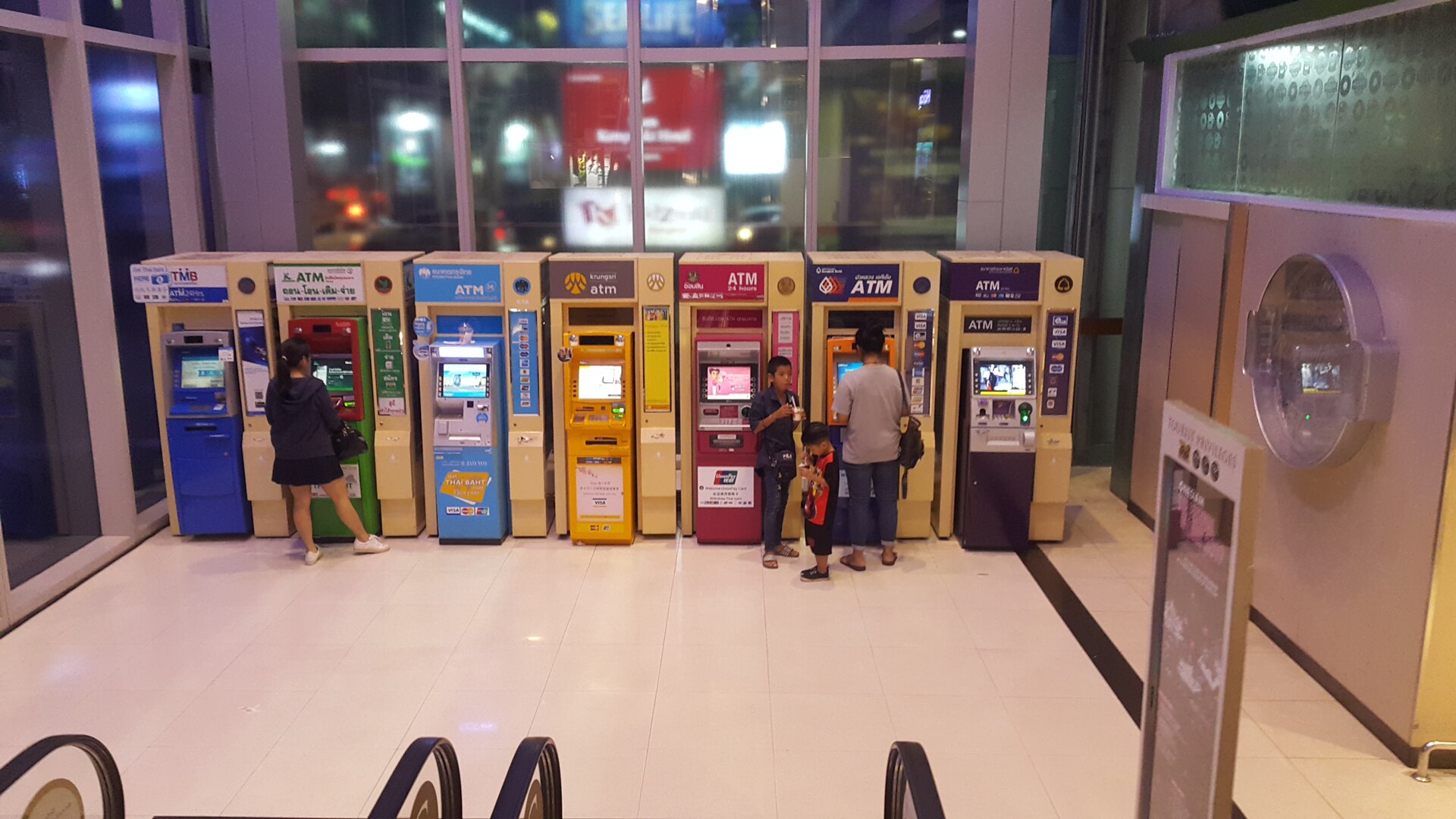
Thai bank ATM
Convenient when you do not have cash, but the total cost may include the ATM owner’s fee, your card issuer’s fee and currency conversion.
- Best for
- Occasional baht withdrawals using a foreign card.
- Check before you proceed
- The fee shown on screen, the per-transaction limit and charging in THB without ATM conversion.
How to read the rate correctly
When you hand over foreign cash and receive baht, the exchange provider is buying your currency. Look at the Buying / Buy column, not Selling / Sell.
Some providers apply different terms by banknote denomination and condition. Do not hand over the cash until the applicable rate and final payout are confirmed. Count the baht at the counter and keep the receipt.
- Compare the final payout, not only the headline number.
- Carry your original passport because identification may be required.
- Never exchange through an informal street contact, inside a vehicle or without a receipt.
- Do not display the whole amount in public or recount it on the street.
ATMs and DCC: choose Thai baht
A Thai ATM may offer to charge the withdrawal in your card’s home currency. This is Dynamic Currency Conversion. The ATM operator sets that conversion rate and may include an additional markup. Visa says both amounts, the rate and any markup should be disclosed, and the cardholder must be allowed to choose.
A practical rule is to withdraw THB and decline the ATM conversion. The option may read Continue without conversion, Decline conversion or Charge in THB. Your card network and issuer will then apply their own conversion terms.
- 01
Use an ATM operated by an established bank in a well-lit place, preferably inside a branch or shopping centre.
- 02
Read the ATM operator’s fee before confirming; it is separate from any fee charged by your card issuer.
- 03
Withdraw a sensible amount per transaction without carrying more cash than you can secure.
- 04
Cover the keypad, then collect your card, cash and receipt before stepping away.
Larger amounts and property payments
For a larger transfer, a transparent money trail matters as much as the exchange rate. Foreign-exchange transactions in Thailand should be conducted through authorised banks or licensed operators. The bank or partner may ask for identity, source-of-funds and payment-purpose documents.
Property payments require particular care with the transfer purpose, beneficiary details and bank evidence. Do not artificially split payments or send a large amount to an intermediary’s personal account without checking the contract and account details.
- 01
Tell the bank or licensed partner the currency, amount and purpose in advance.
- 02
Request a written calculation covering the rate, sender and recipient fees, and expected baht amount.
- 03
Verify the beneficiary name and account against the formal contract, not only a messenger chat.
- 04
Keep the SWIFT confirmation, receipts, contract and source-of-funds documents.
A safer routine in Pattaya
These checks take only a few minutes and prevent most avoidable problems.
- Check the provider through the Bank of Thailand licence service or ask to see a current licence.
- Record the displayed or agreed rate before handing over money.
- Match the receipt to the payout and count cash within camera view.
- Plan larger cash movements and transfers before the day of the transaction.
- If payment details change at the last minute, stop and verify them through an independent channel.
Frequently asked questions
Do I need my passport?
Carry the original. Requirements vary by transaction and provider, and automated currency-exchange machines operated by some banks also require a passport scan.
Is the airport or the city better for exchange?
There is no permanent answer because terms vary by currency, denomination and outlet. Exchange a small arrival amount if needed, then compare the final payout at two or three licensed providers.
Why does the ATM show my home currency?
That is a DCC offer. It makes the amount look familiar, but the ATM operator sets the conversion rate and may add a markup. Charging in THB is usually the clearer choice; always check your own bank’s fees.
Can I give cash to a partner to pay for a property?
A documented bank transfer with the correct purpose is safer for a large purchase. Agree the payment route with the bank, legal adviser and contract party before sending funds.
How can Simetria help?
Simetria is not a currency exchange. We clarify the task, explain the safer process and, when appropriate, introduce the client to a licensed partner who confirms the rate, documents and transaction terms.
Sources checked
This guide uses Bank of Thailand rules, official bank terms and card-network guidance. Always confirm the live rate and fees before a transaction.
This article is general information, not personal financial or legal advice. Bank rules, limits and fees can change.